The Atelier
The care is in the parts no one sees.
A garment can be judged in a shop in a matter of seconds. It can only be made well over a far longer time — in places a customer will never visit, through choices a customer will never see. Blanq is built around those choices, because they are the only thing that separates a piece that is good from one that merely looks good on the day it is bought.
I — The Decision
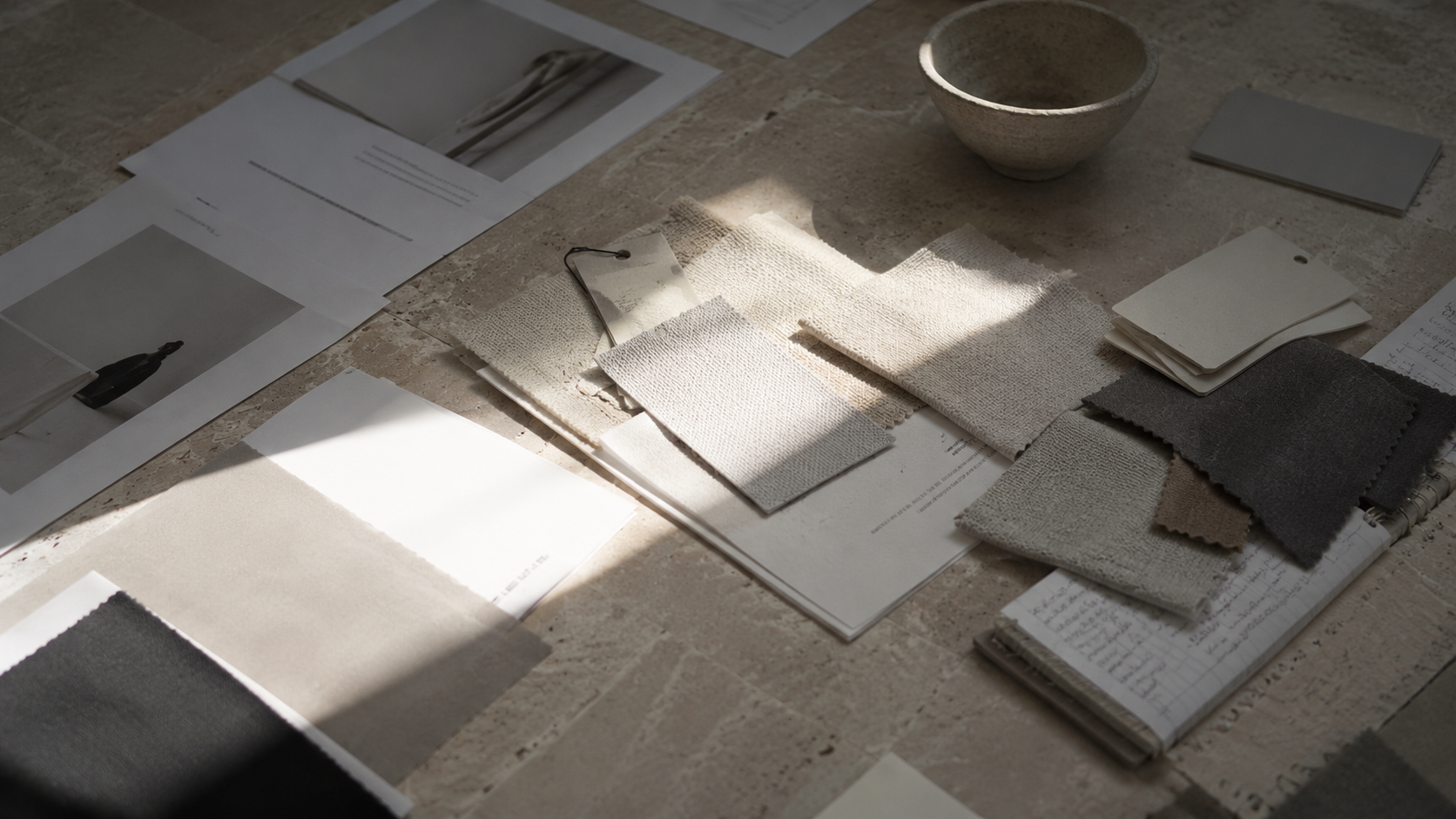
Most of our work is deciding what not to make.
A piece enters production only when three things agree: the material is right, the workshop is right, and the reason for it to exist is honest. If one of them is missing, the piece is not made — however strong the idea, however well it might sell.
We hold back far more than we release. That restraint is where quality begins, long before anything is cut.
II — The Yarn
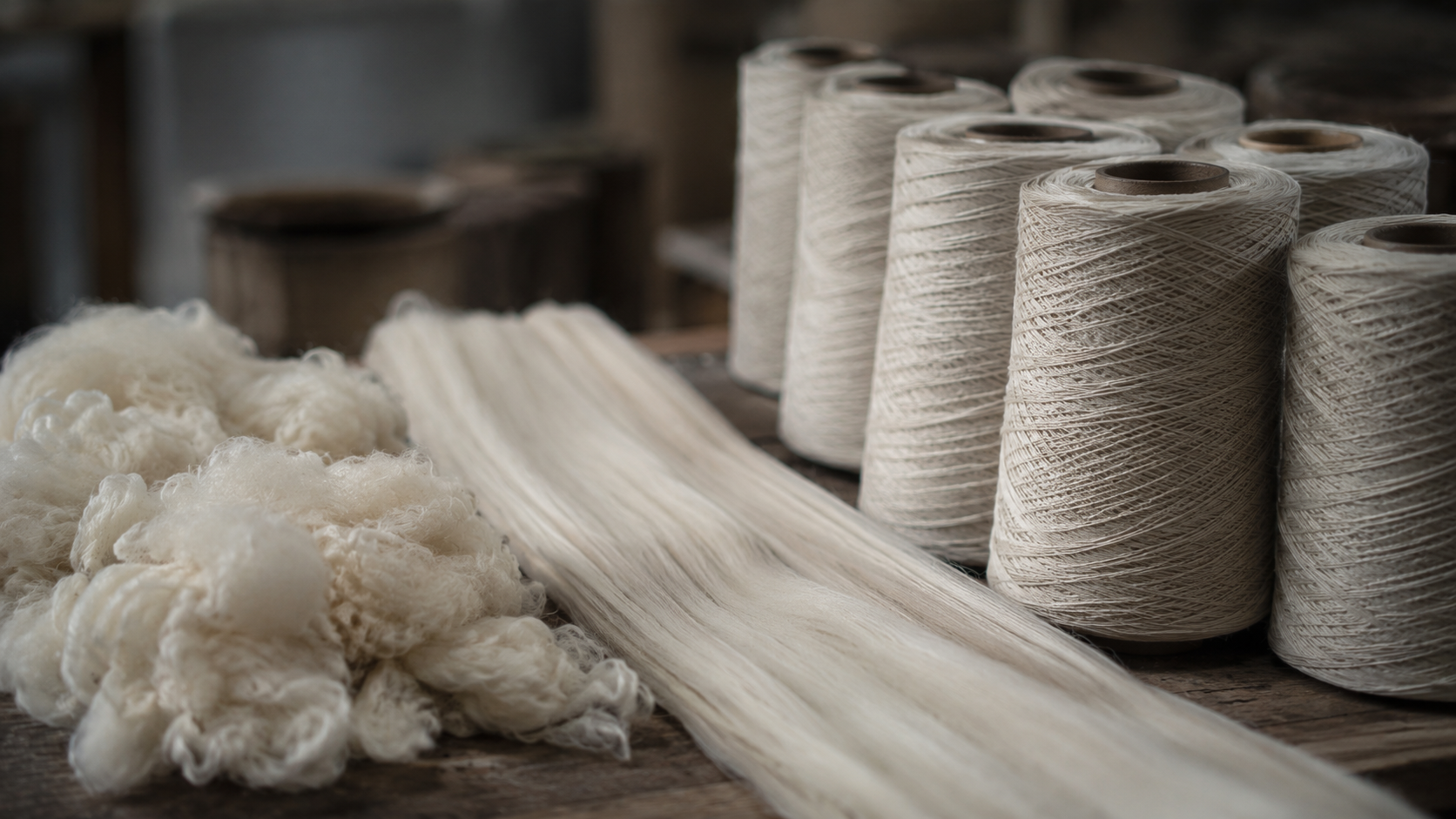
Good cloth is decided long before the loom.
Before a single piece takes shape, the fibre is prepared with a patience modern production rarely permits — combed, and combed again, then turned into yarn slowly. Haste frays a yarn early; patience is what allows a piece to survive its fiftieth wear as gracefully as its first.
None of this can be seen at the moment of purchase. By the second winter, it is the whole story.
III — The Hand
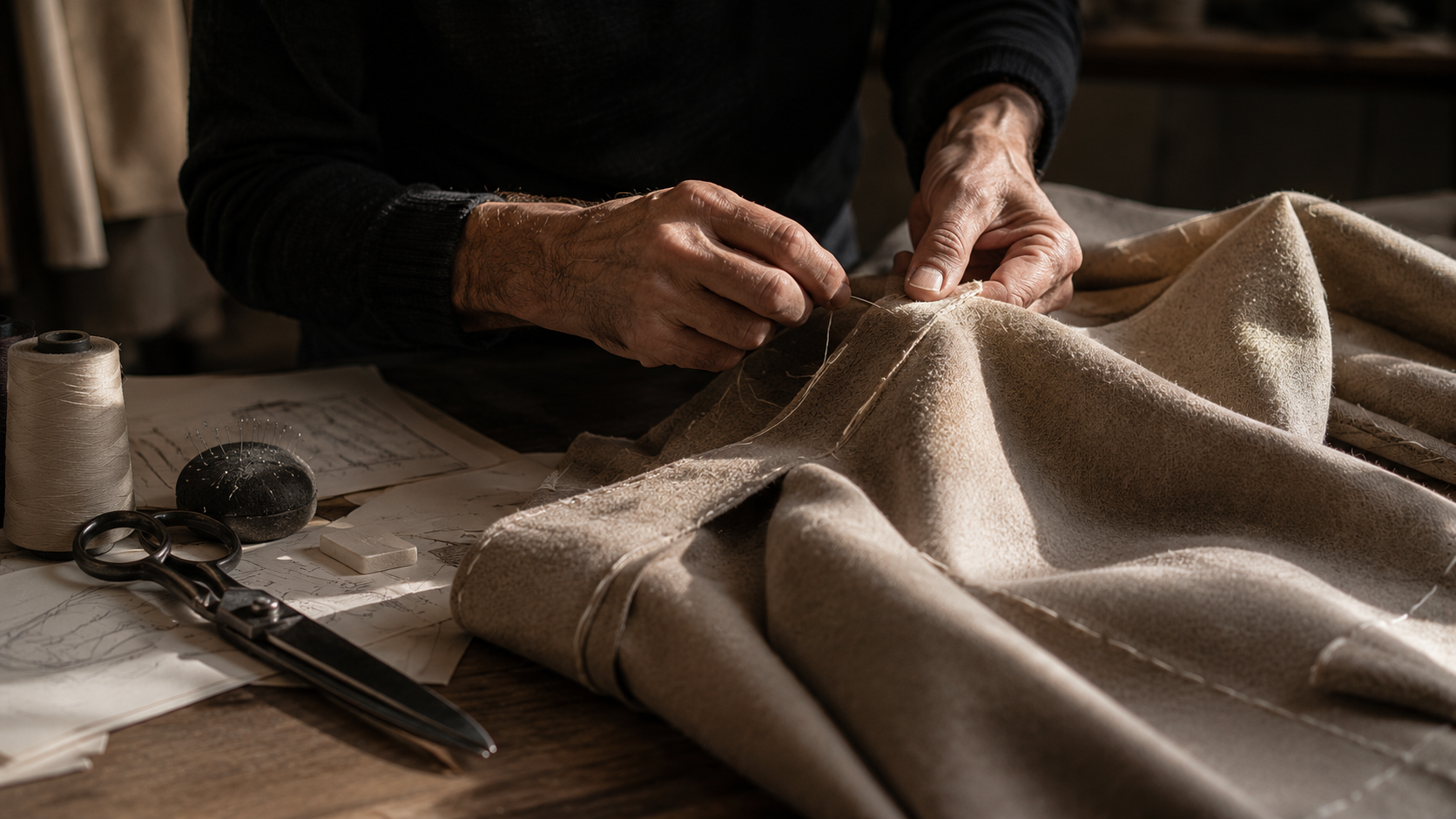
A machine can assemble a garment. Only a practised hand can make one well.
Our pieces are built in a small number of workshops we return to, season after season, by people who have made the same things for years. We do not move to cheaper hands each season, because skill of this kind cannot be written into a spreadsheet.
It lives in those who have done the work a thousand times, and who recognise a wrong shoulder before any measure does.
IV — The Finish
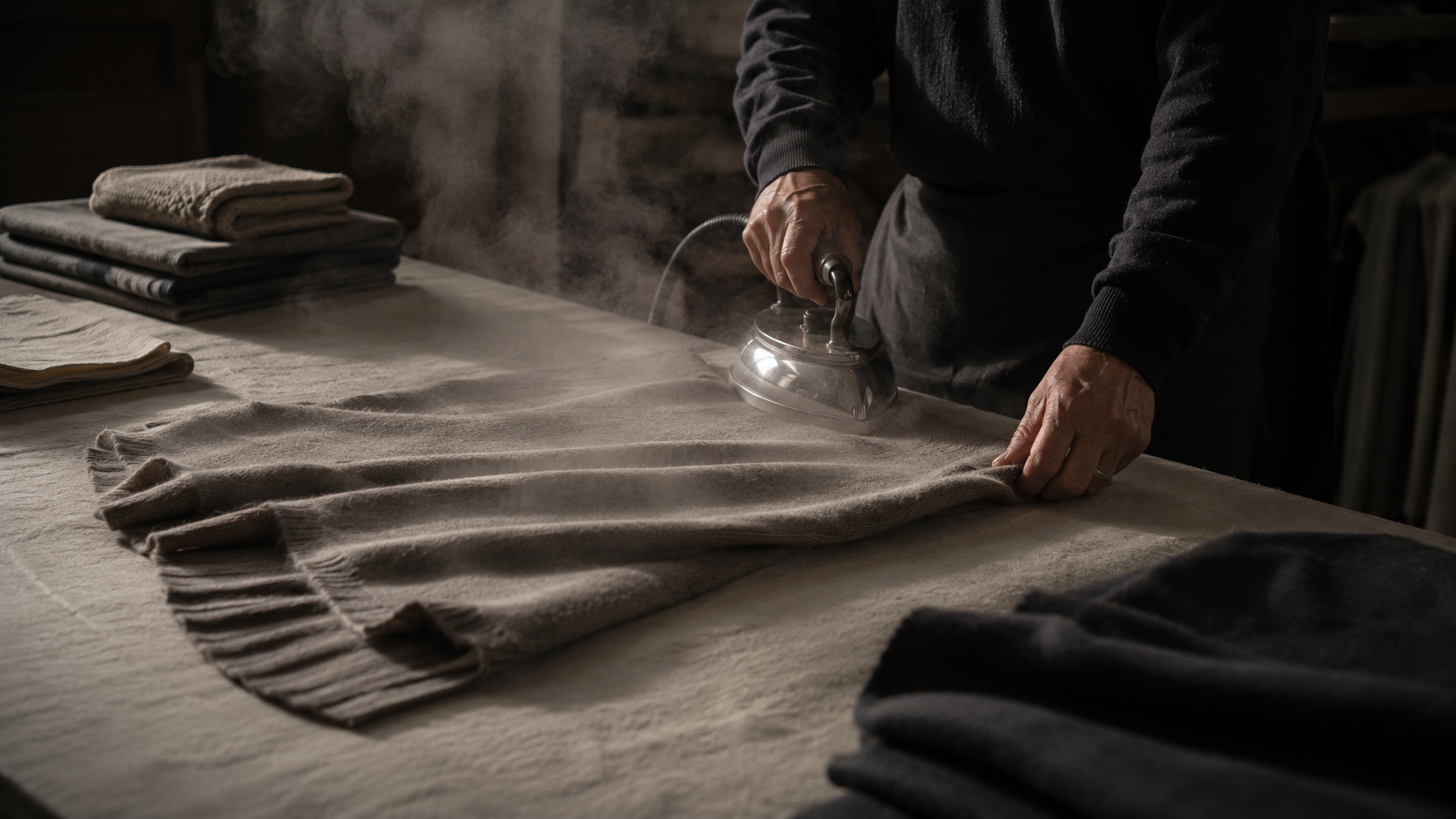
How a garment ages is decided in its final hours.
Finishing is where corners are most quietly cut, precisely because the buyer cannot see it at the point of sale — only later, when a piece holds its shape or slowly surrenders it. We treat it as the most demanding stage of all.
Our cashmere is finished in humid air, so the fibre stays supple; everything we make is pressed and allowed to settle slowly, so that what reaches you has already become what it will be.
V — The Refusal
The final question is the simplest one we ask. Is it good enough to carry the name?
Nothing leaves until that question has an honest answer. What falls short is not discounted, relabelled, or quietly let through — it is held back. We would rather have less to offer than put forward something we cannot stand behind.
This, in the end, is the only definition of luxury we accept: not the willingness to add, but the willingness to refuse.
The Catalogue